We are introducing the "Golden Soyombo" educational program, which explains the meaning and symbolism of the "Soyombo" character—the first letter of the Soyombo alphabet created by Undur Gegeen Zanabazar and featured on the Mongolian national flag. We invite you and your family to work together to assemble and color your own "Golden Soyombo."
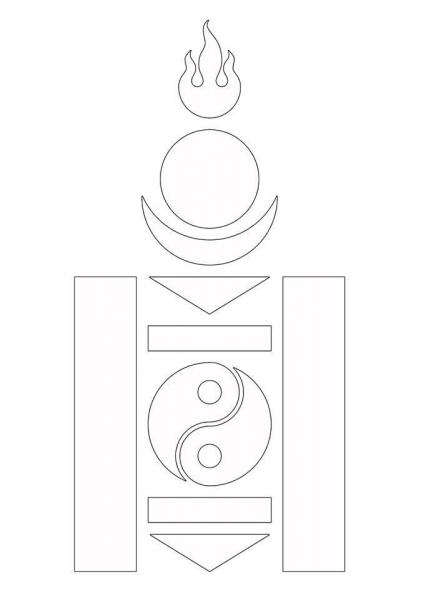
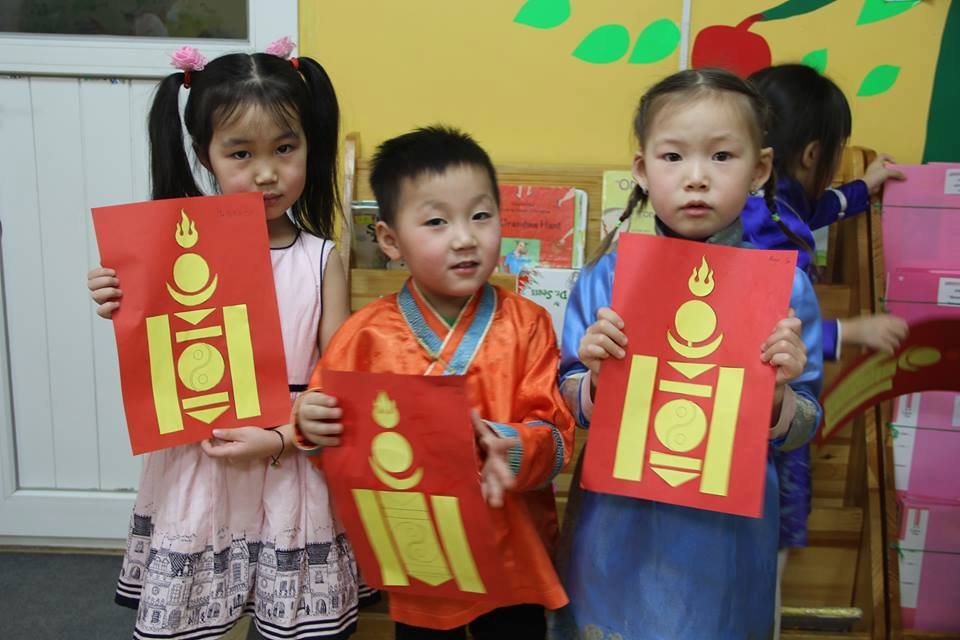
Here is a brief introduction to the "Soyombo"—a symbol reinstated on the national flag and the state jade seal when Mongolians rose up for their freedom and independence in 1911, and which remains central to the Mongolian national flag and the people's consciousness today—based on the detailed research of Academician B. Rinchin. Materials needed: A4-sized red and yellow paper, scissors, paper glue. Instructions: 1. Carefully read about the meaning and symbolism of the Soyombo. 2. Print one copy of the Soyombo on A4-sized red paper and one on A4-sized yellow paper. 3. Carefully cut out the Soyombo printed on yellow paper. As you cut, count the different shapes and how many of each there are. Discuss the meaning and symbolism of these shapes with others. 4. Align and glue the carefully cut-out yellow Soyombo onto the red Soyombo. 5. Share the meaning and symbolism of the completed Golden Soyombo with your family.
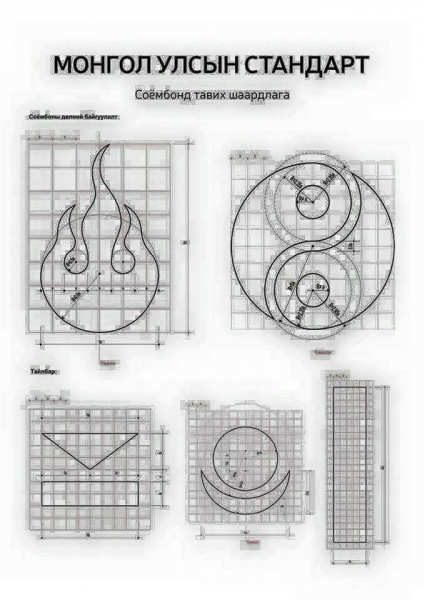
The design strictly adheres to the proportions and the 1:2 width-to-length ratio specified in the original model attached to the Constitution of Mongolia. At the very top of the Soyombo symbol are the emblems of the sun, moon, and fire. The sun and moon represent the nation of Mongolia. The fire is depicted with a three-pointed flame, reflecting the ancient Mongolian reverence for fire as the sacred hearth (*gal golomt*). This three-pointed design signifies that the Mongolian hearth—and the nation itself—will flourish eternally across the past, present, and future. The triangular shape within the Soyombo represents the tip of a spear or arrow used against enemies in ancient times, symbolizing the defeat of adversaries. Its presence at both the top and bottom signifies that all Mongolians—regardless of age, status, or gender—are united in a single spirit to ensure the nation's independence and prosperity, and to vanquish enemies from any direction. The rectangular shapes featuring horizontal lines and angles symbolize the duty of all Mongolians—high and low, young and old—to contribute their efforts honestly and uprightly for the sake of their country. In the center of the Soyombo are two fish facing each other; ancient Mongolians regarded the fish as a creature that never closes its eyes, thereby symbolizing vigilance and alertness. The two fish depicted within it symbolize *yin* and *yang*, or the male and female principles. The vertical rectangles on either side of the Soyombo represent fortress walls, conveying the idea that if the people unite with a single purpose for the sake of the state, Mongolia will become as strong and secure as an iron fortress. A lotus flower was added beneath the Soyombo symbol in 1924.